• News
  • Blog
  • Contact
Media Art League /en
Menu   ≡ ╳
  • JAPANESE
  • HOME
  • Introduction
    • Mission
    • Objective
    • Activities
    • Chronology
    • Clients
  • Our Work
    • Screenings
    • Photo Exhibitions
    • Book Projects
    • Media Coverage
    • Media Contributions
    • Media Assignments
  • Creative Projects
    • Artwork Production
    • CSR Projects
    • Photography Projects
    • Web Media Production
    • Design Projects
  • Publishing & Educational Activities
    • Publishing Activities
    • Book Publications
    • Book Reviews & Interviews
    • Photography Textbooks & Essays
    • Lectures & Workshops
  • International Communications
    • International Editorial Contributions
    • Research Projects
    • High End Translation
    • Clients
    • Profile of Andreas Boettcher
  • MIRO ITO + NPO Activity
    • Mission Statement
    • Purport & Objective
    • Activities & Structural Configuration
    • Founding, Vision & Contribution

masterpieces of tenpyo era sculptures

Media + Art = Message No.17: Emperor Shōmu’s True Motives for the Construction of the Great Buddha—‘For a world in which all things—flora and fauna alike—may flourish’

2026-10-17

The ‘Road of Light and Hope’ photography exhibition of Tōdai-ji’s National Treasures (by MIRO ITO) opened on 29 September, at the University of Salamanca in Spain. After being held at the United Nations Headquarters in New York in May 2016, this is its13th venue in 11 countries on world tour.
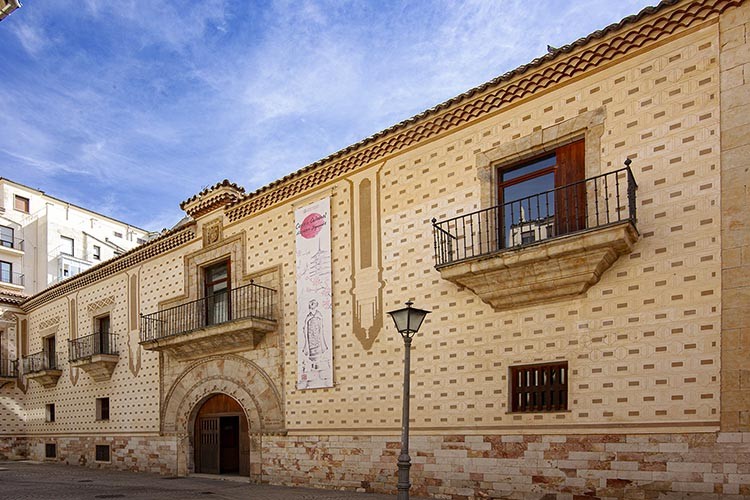
Spanish-Japanese Cultural Center (Palacio de San Boal), Salamanca


This exhibition promotes the all-encompassing worldview of the Huayan (Kegon in Japanese) philosophy, which holds that ‘all things are interconnected and everything is linked as one’. Around 1,300 years ago, in a time of national crisis, when Japan suffered major earthquakes and famines while smallpox was rampant, Emperor Shōmu issued an imperial edict in 743 CE ordering the construction of the Great Buddha—as a catalyst of national unity.

Over half of the nation’s estimated 5 million population heeded Shōmu’s appeal to help create the statue: ‘even with just a single stem of straw and a handful of earth’.
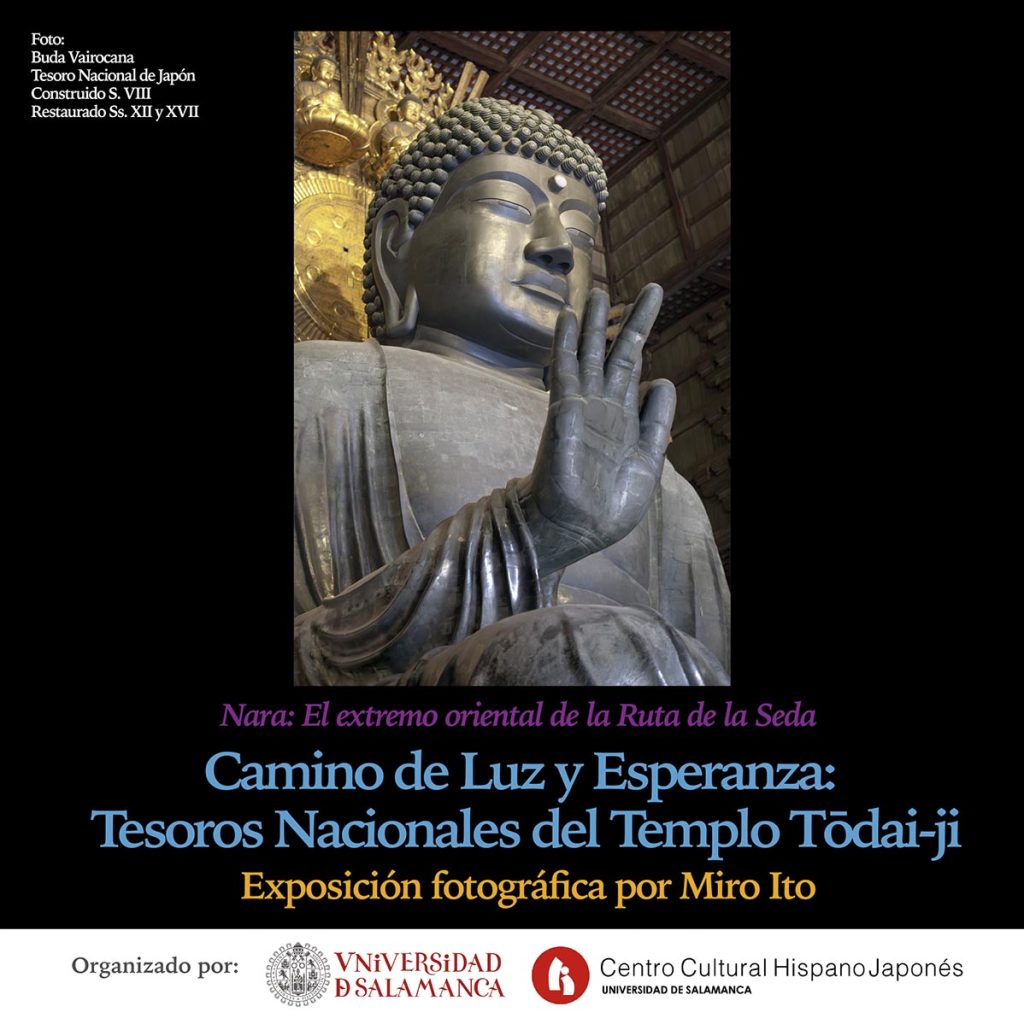
Brochure (‘Road of Light and Hope: National Treasures of Tōdai-ji Temple by Miro Ito)


That nothing in this world exists in isolation; that everything is infinitely interconnected and interrelated; that all things are one—this message should be embraced by all as something extremely important that we can do in our everyday lives. Even though the empathy of one individual may only be a tiny ripple, it can resonate through the whole world as through a tuning fork.
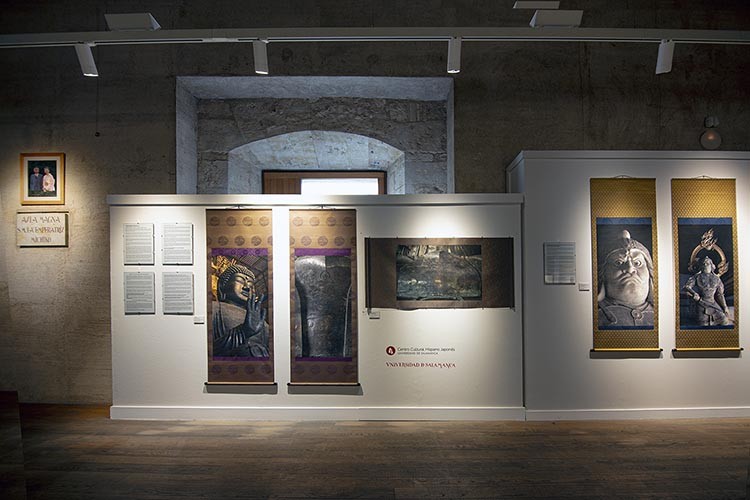
“Empress Michiko Hall”: The only venue in the world permitted to bear the name of a former Empress (with a photograph of retired emperor & empress displayed in the top left-hand corner)


🔸Unraveling the History of East-West Exchange: From National Treasures to Important Cultural Properties, including hidden Buddhist statues

Another focus of this exhibition is to trace the history of East-West cultural exchange and highlight the commonalities between East and West as well as North and South within cultures.
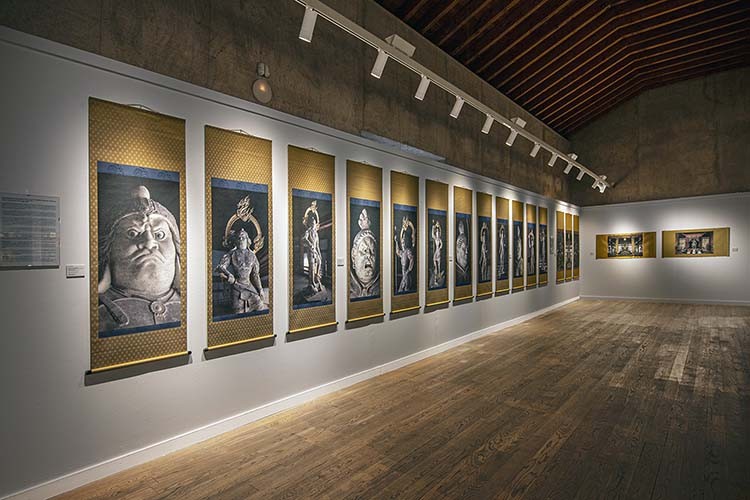
Four Heavenly Kings (Kaidan-dō) and two photographs depicting Hokke-dō’s inner sanctum (back of right side)


During the golden age of the Tang Dynasty (712–765), centered on the reign of Emperor Xuanzong and known as the ‘High Tang’, the capital of Chang’an saw the blossoming of a culture of unprecedented international diversity, fueled by trade along the Silk Road. This remarkable international character and diversity were also introduced to Heijō-kyō (710–794), Japan’s imperial capital at the time. Today, Nara, along with Chang’an (Xi’an) across the sea, are known as the ‘easternmost terminus of the Silk Road
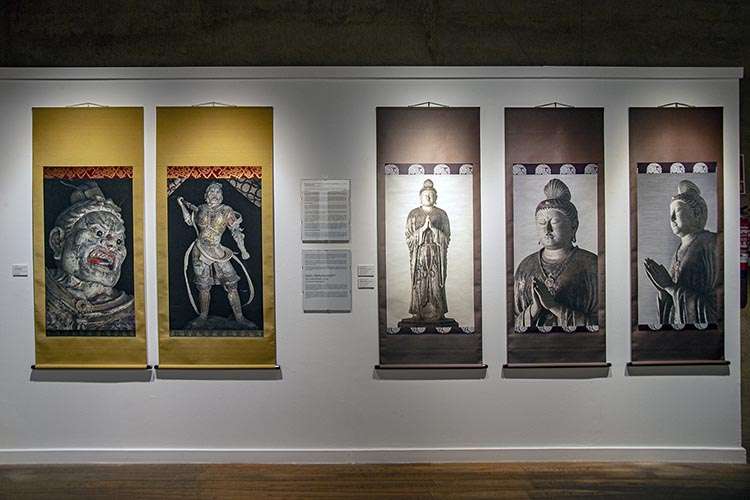
Hidden statue of Vajrapani in the Hokke-dō (left) and statue of Indra (Gakkō)


In this exhibition, we explore the points of convergence between the zeniths of Eastern and Western aesthetic traditions, as seen in a collection of 8th-century National Treasure Buddhist statues (Japanese National Treasures), which were photographed with special permission from Tōdai-ji Temple. These include the hidden statue of Vajrapani in the Hokke-dō, which has its origins in Hercules, and the Four Heavenly Kings statues in the Kaidan-dō, which follow the realistic style of classical Greek art, and the statues traditionally attributed to Nikkō and Gakkō (representing Indra and Brahma), which were originally part of the same ensemble: an impressive collection of masterpieces of Nara-period clay-sculpture
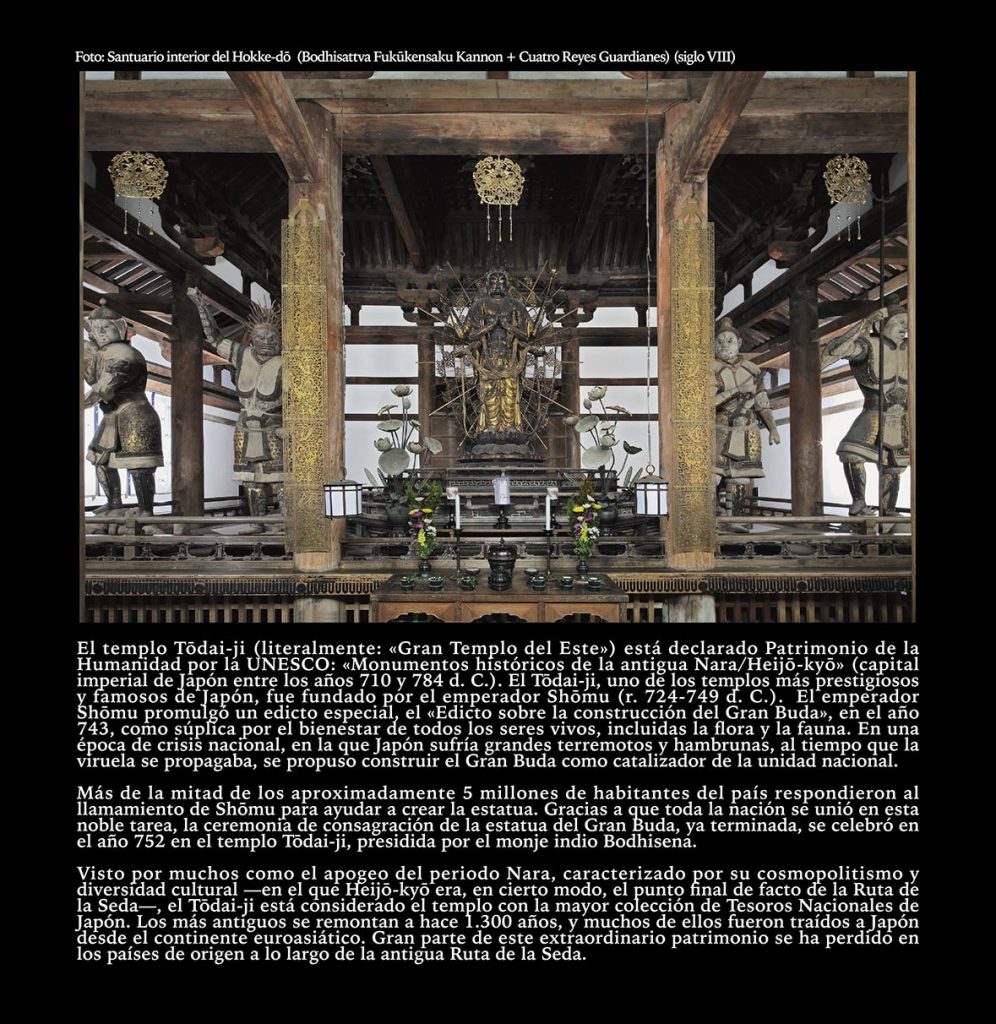
Inner Sanctum of Hokke-dō (Principle image: Fukūkensaku Kannon)/ Brochure: ‘Camino de Luz y Esperanza: Tesoros Nacionales del Templo Tōdai-ji por Miro Ito


Furthermore, an ancient Greek historian once pointed out that the statue of the Bodhisattva Fukūkensaku Kannon (Sanskrit: Amoghapāśa) in the Hokke-dō is also linked to Hercules through its association with the god Shiva.
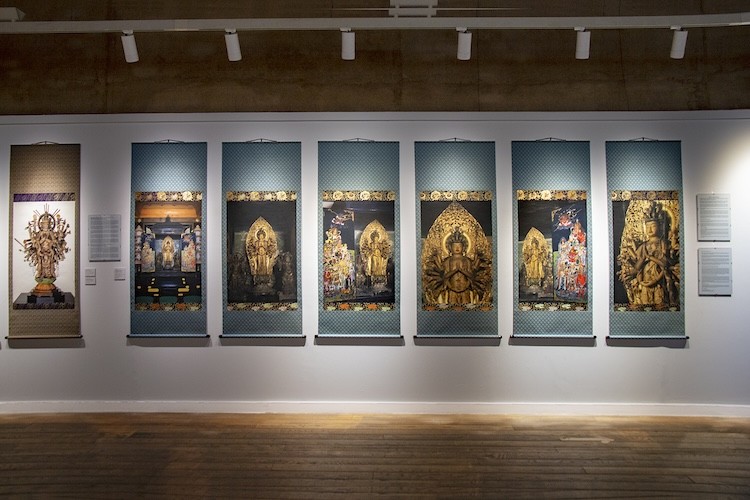
Senju Kannon/Thousand-Armed Kannon statues: Tōdai-ji Museum and Senju-dō


In addition, the Eleven-Headed Bodhisattva statue (11~12 centuries), the principal image enshrined in the Shigatsu-dō Hall at Tōdai-ji, and the Thousand-Armed Kannon statue (13 century)—a secret statue enshrined in the Senjūdō Hall—also add a unique touch to the exhibition.
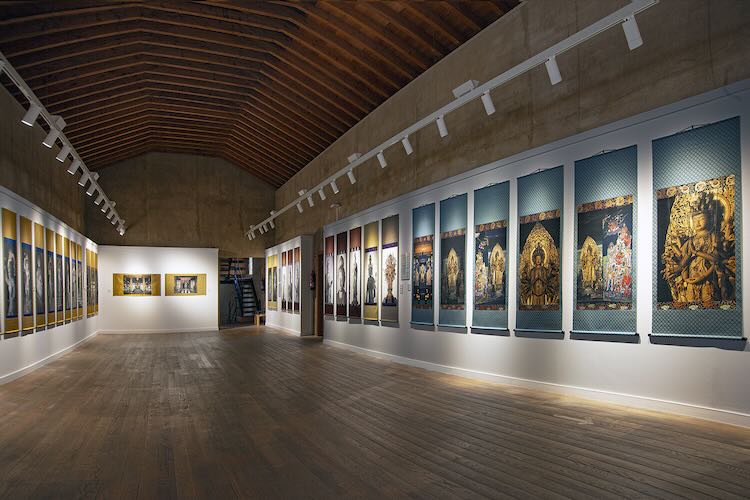
Senju Kannon/Thousand-Armed Kannon statues: Tōdai-ji Museum and Senju-dō (right side wall: from the right to middle)
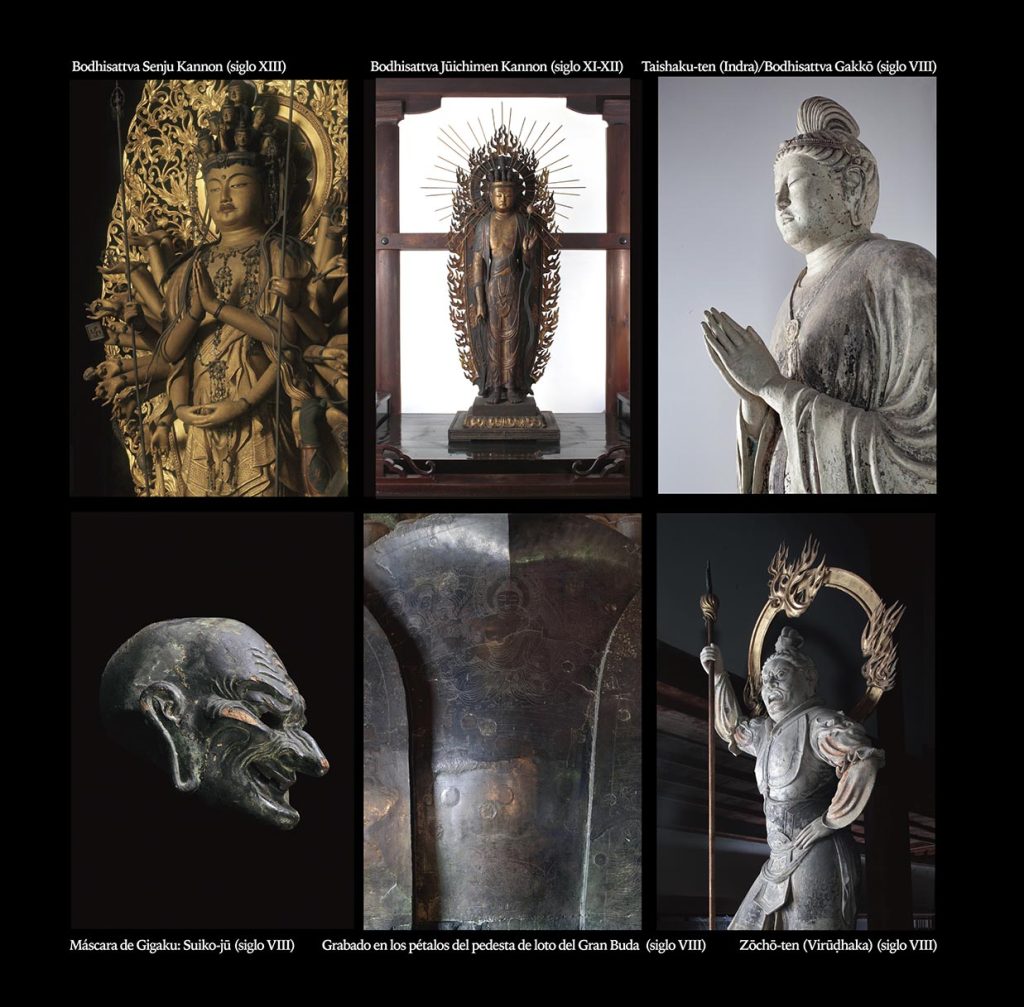
(Brochure: ‘Camino de Luz y Esperanza: Tesoros Nacionales del Templo Tōdai-ji por Miro Ito)


The exhibits also include such photographs as the 8th century Gagaku masks from Tōdai-ji—which bring together performing arts and folk traditions from along the Oasis Route—as well as the 12 century Bugaku masks—a collection of court performing arts from along the Maritime Silk Road—belonging to the Kasuga-Taisha Shrine; both sites are part of the UNESCO World Cultural Heritage Site: Historic Monuments of Ancient Nara.
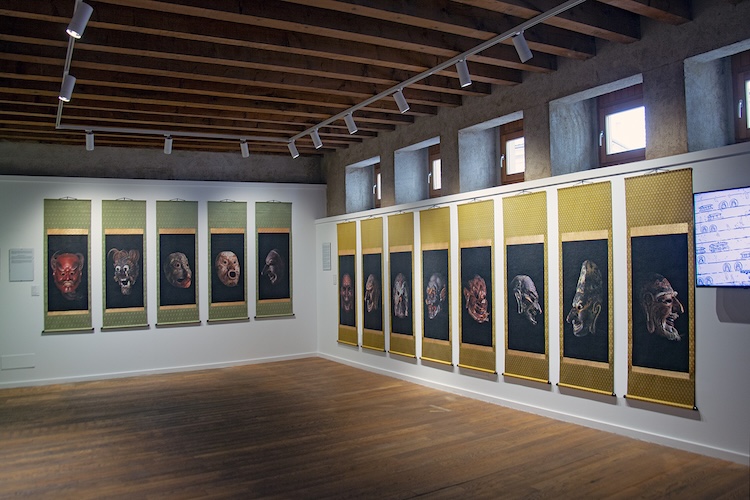
Gigaku masks of Tōdai-ji (right wall) and Bugaku masks of Kasuga-Taisha Shrine
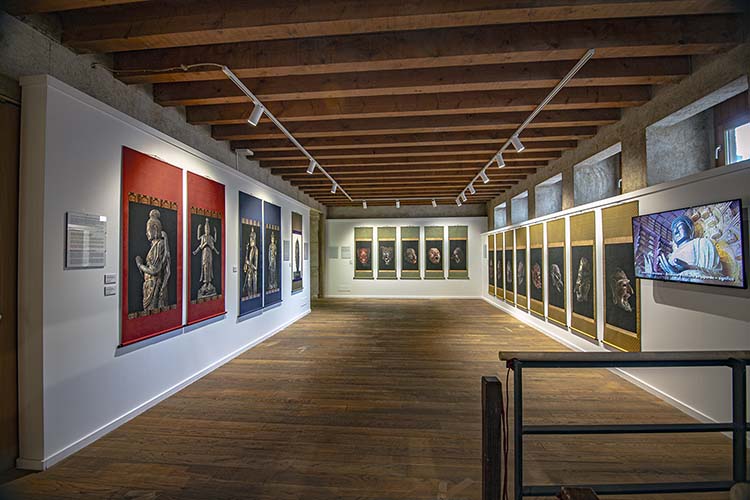
Gigaku masks of Tōdai-ji (right wall) and Bugaku masks of Kasuga-Taisha Shrine (middle wall) and Buddhist statues of Daianji (left) and Shorin-ji (middle in left wall)


The masterpieces of the Buddhist sculpture art of the 8th century of Daian-ji and Shōrin-ji will be also added in the coming venue in Salamanca. Furthermore, a new short film by Miro Ito will be screened on site (in Spanish): The Vairocana Buddha of Tōdai-ji Temple: Formation of Cosmic Life-Force and Light of Wisdom.
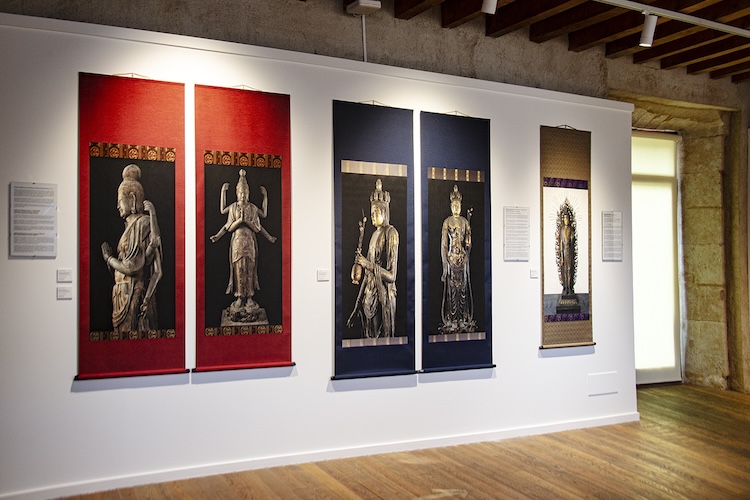
Buddhist statues of Daianji (left), Shōrin-ji (middle) and Tōdai-ji Temples


🔸Opening Ceremony

The National Treasures featured in this exhibition are represented by two life-size statues of Prince Shōtoku—both considered to be ‘hidden Buddha’ statues: a Kannon of Salvation from the Asuka period (early to mid-7th century) and a statue of Prince Shōtoku (Regent Statue, 1122) created 500 years after his death in 622 CE.

The Kudara Kannon statue, exhibited at the Louvre in 1997, and the Yumechigai Kannon (lit. Dream Changer) statue, exhibited at the British Museum in 2019, also add to the exhibition’s appeal. Two more important statues—the two-year-old and the sixteen-year-old Prince Shōtoku—which were created as Prince Shōtoku’s beliefs spread, are Important Cultural Property from Gangō-ji (formerly Hōkō-ji), Japan’s first Buddhist temple.
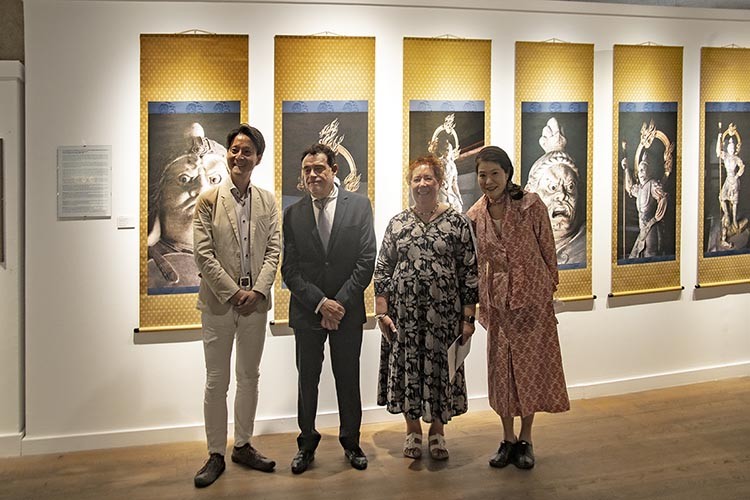
From left to right: Mr. Takeda, Mr. Flores, Ms. Martinez and Miro Ito
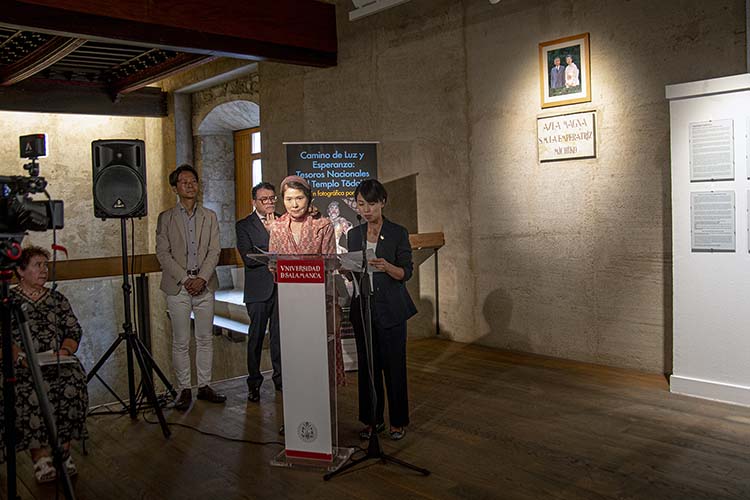
Inauguration speech by Miro Ito (translated into Spanish by Ms. Sugiyama)


Dates: 29th September to 18th December 2026

Opening hours: Monday to Friday (11:00 AM to 1:45 PM, 5:30 PM to 8:45 PM)

Address: Pl. de San Boal, 13, 37002 Salamanca, Spain

Tel: +34 923 29 45 60

EXPOSICIÓN: Camino de Luz y Esperanza

Organised by: Spanish-Japanese Cultural Center, University of Salamanca(Centro Cultural Hispano Japonés, Universidad de Salamanca)
Co-organised by: Media Art League + Japan Camera Industry Institute
Concept and Production: Media Art League

Photo permits by: Tōdai-ji, Daian-ji, Shōrin-j Temples; Kasuga-Taisha Shrine, Nara National Museum

Photography, text and video by: Miro Ito
English editing by: Andreas Boettcher
Spanish editing by: Spanish-Japanese Cultural Center, University of Salamanca
Endorsed by: Embassy of Japan in Spain; Japan Foundation, Madrid
2026 (C) Photographs & text by Miro Ito/Media Art League. All rights reserved.


🔸More Information

FUNDACIÓN JAPÓN MADRID

https://md.jpf.go.jp/es/Actividades/Eventos-organizados-por-otras-instituciones/evento/400/camino-de-luz-y-esperanza-202609291218

Media = Art + Message #6 — “Signs of the Intangible”– the quest for mind-body-scapes in Japanese dedicatory tradition

2018-06-09


Signs of the Intangible, Japanese Canadian Culture Centre, Toronto

Signs of the Intangible

Bodyscapes reflecting Japan’s 1400 Years of Performing Arts by Miro Ito 

Photo Exhibition, Artist Talk & Short Film Screenings

Commemorating the 90th Anniversary of Diplomatic Relations between Canada and Japan, our new exhibition“Signs of the Intangible” can be experienced at the Japanese Canadian Centre in Toronto. Co-organized by Media Art League and Japan Camera Industry Institute, this presentation showcases the 1400 years of continuity in Japan’s performing arts in exquisite photographs as well as short film format.

It features 55 outstanding photographic images of select National Treasures of Japan, as well as UNESCO Intangible Cultural Heritage such as Noh performers, or avant-garde Butoh dancers as well as contemporary dancers. Topical film shorts by Miro Ito will also be shown.

The uniqueness of this presentation accentuates a “never-seen-before” perspective on how these exceptional tangible or intangible arts and traditions interact: 8th century Buddhist sculptures influenced by Hellenistic culture, Gigaku and Bugaku masks (that came to Japan in the 7th century via the Silk Road), Noh performance and Kobudo martial arts with their 600 year tradition, as well as contemporary dance performances like Butoh.


[Artist Talk & Reception]
Thursday, 21st June 2018 @7:00 PM (Telephone reservations are recommended)

— Word of greeting from Consul General Takako Ito
— Artist Talk & Short Film Screenings by Miro Ito, Media Art League
— Solo Performance of Gigaku Ballet combined with Konron mask by Shunso  (Artistic Direction by Miro Ito / Music by Sukeyasu Shiba)


[Duration & Venue]

Preliminary viewing start: Thurs., 23rd May 2018

Artist Talk & Reception: Thurs., 21 June 2018 (7:00 PM)

Last day: Wed., 27th June, 2018
Opening Hours: 9:00AM – 8:00PM (daily)

Japanese Canadian Cultural Centre
6 Garamond Court, Toronto, ON, M3C 1Z5    Tel.(416) 441-2345  http://www.jccc.on.ca/en/

※Click to download the exhibition poster in PDF:_signs_of_the_intangible_poster_2018June11


Searching for an Ideal of mind-body unity

Nurtured in a nature worshipping environment (Shintoism) where everything is seen as a manifestation of kami, and influenced by Buddhism, the key element that provides continuity is the dedicatory tradition evident in the Shinto-Buddhist syncretism prevalent in Japan since the 7th century.

From the 12th century onward, Zen Buddhist influences, advanced an ideal of mind-body unity called “shinshin ichinyo“, as the path to emancipation/liberation (gedatsu) — not only in religious contexts, but also —- in performing arts like Noh and in martial arts, such as Kobudo, under the patronage of the samurai clans that inherited the shogunate.

As Zen Buddhist teacher, Hakuin put it “our soul has a physical dimension and our body has a spiritual dimension”, so the body is the “ba” (topos) for the transformation towards an ultimate goal of “gedatsu” (lvimokṣa in Sanskrit) in Oriental ascetic tradition and meditation.


Icons of Unity for East and West

This project’s unique perspective pursues the foundations of the profundity of Japanese culture as well as the origins of various types of Japanese performing arts as an enduring legacy of ancient cultures from the Eurasian continent.

Evidently, the origins of many Asian sculpting traditions can be traced back to statues (Άγαλ&α) dedicated to ancient Greek deities. This presentation, “Signs of the Intangible” showcases select artwork as “evidence of the interconnectedness of East and West”.

Finding common ground transcending the Eurasian continent within the cultural heritage along the Silk Road may present a ray of hope for one day realizing true unity and solidarity among mankind…

This is the very essence of the messages enciphered in the history of 1400 years of Japanese Performing Arts.


Co-organizers: Media Art League and Japan Camera Industry Institute
Host: Japanese Canadian Cultural Centre
Exhibits: 55 Photographic Images by Miro ITO (Media Art League)
Project Management & English Editing: Andreas Boettcher (Media Art League)

Special Permission: Tōdai-ji Temple, Kasuga-taisha Shrine, Nara National Museum

Participating Performers: Hodaka KOMPARU, Yukifusa TAKEDA, Tomoyuki TAKEDA, Fumiyuki TAKEDA, Ko MUROBUSHI, Sal Vanilla, Shunso

Exhibits of Photographic Art in Scroll Format: Tenpyō era sculptures of Tōdai-ji Temple (National Treasures of Japan) , Gigaku masks of Tōdai-ji Temple (Important Cultural Property), Bugaku masks of Kasuga-taisha Shrine (Important Cultural Property)

Support by: The Consulate-General of Japan in Toronto, the National Federation of UNESCO Associations in JAPAN, the Tokyo Club, Nara Visitors Bureau, etc.


Text by Media Art League. Photographs: Miro Ito. All Rights Reserved.

Media = Art + Message #2 – Todai-ji Temple’s treasures as evidence of ancient cultural cross-pollination in Nara: Toronto photo exhibition starts.

2017-03-21

Road of Light and Hope: National Treasures of Todai-ji Temple, Nara

Photographs by Miro Ito

The photo exhibition “Road of Light and Hope: National Treasures of Todai-ji Temple, Nara” opened 15th March at the Japan Foundation Toronto where it will be on display until 28th June 2017. This exhibition collects representative photographic images of artifacts of the Todai-ji —collected throughout its eventful 1300 year history— especially those that are evidence of cultural cross-pollination between east and west.

This evidence can be seen from two perspectives:

One is against the background of the construction of the Todai-ji’s Great Buddha (Vairocana) that symbolizes all the interconnectedness. The other is the cosmopolitanism of the Tenpyo era (729-749) sculptures with their traces of Hellenistic influences —conveyed to Japan via the Silk Road— evident in their features.

With the special permission and cooperation of Todai-ji Temple, and the kind offices of Japan Camera Industry Institute (JCII), Media Art League and the Japan Foundation Toronto are co-presenting this exhibition, comprising 41 photographic hanging scrolls of national treasures and important cultural assets, and 30 framed photographs. Since 2004, I have been photographically documenting these cultural testaments seeking to build bridges between east and west, adopting the ideals that I have learned from the history of the Todai-ji and its founder, Emperor Shomu.


Light of reconstruction and hope

About thirteen centuries ago during the Nara era, the great Vairocana Buddha statue of Todaiji Temple was erected at a time that frequently saw unprecedented natural disasters like huge earthquakes, droughts, famines and epidemics. Some 4.5 million citizens came together to help fund this undertaking. Under the slogan, “every single blade of straw or handful of soil helps”, Emperor Shomu called for everyone from all corners of the land to contribute to the best of their ability. Tens of thousands of people provided their labour enabling the huge statue to be completed in the year 752. 

The project provided encouragement, stability and employment to the people at a time when they were disheartened and burdened by repeated heavy disasters.

From its completion to modern times, the giant Buddha statue faced numerous earthquakes and wars during which it was twice destroyed. Each time, the citizens performed miraculous reconstruction work. Consequently, the giant Buddha has become a powerful symbol of Japan’s hope and resilience.

Concurrently, it is also a symbol of solidarity and interdependence in keeping with the Hua-yen Buddhist tenet that governs the universe: “all is one and one is all”.

In fact, while the traditions embraced by the Todai-ji are considered by many to be the quintessence of the Japanese psyche, I am endeavouring to share and convey these, through my photographs, across borders and cultures.


The road to world peace goes ever on…

Now, in March 2017, it has been six years since Japan’s triple disaster (earthquake, tsunami, and nuclear reactor catastrophe), yet ever more mega-disasters as well as regional conflicts and religious strife appear to be threatening the world order.  Against this background, it is ever more important for us to seek to restore a semblance of peace by genuinely attempting to empathize and share with the growing multitudes of disadvantaged and vulnerable people around the globe.

It is thus a great honour and pleasure for me to send my humble appeal for solidarity among all living beings to the people of Canada, in the spirit of the emperor Shomu, who prayed that all flora and fauna would prosper with the completion of Japan’s first great Buddha statue.

The world traveling exhibition “Road of Light and Hope: The Eurasian Trail of Wisdom (Σοφια) — between East and West—“ began at the United Nations HQ in New York last May, and was followed up by exhibitions at the Academy of Arts of Uzbekistan in Tashkent and at the Council of Europe HQ as well as le Lieu d’ Europe in Strasbourg in 2016 has now reached Canada, where it will be presented in Toronto at the gallery of the Japan Foundation (albeit, with a different sub-title: “National Treasures of Todai-ji Temple, Nara”) from 15th March to 28th June.

On the 26th of May, I will go to Toronto to hold a lecture accompanied by a screening of short movies on the topic. 

For details of the exhibition, please refer to the Japan Foundation [Toronto] website: http://jftor.org/event/national-treasures-of-todai-ji-temple/2017-03-15/ 


20th March 2017

Miro Ito

artist/author, producer (art & culture)

Media Art League

News

  • Announcement: Tōdai-ji Photo Exhibition ‘Road of Light and Hope’ (by Miro Ito) begins on 29th Sept.2026 at University of Salamanca 2026-09-29
  • Announcement: ‘The Historical Significance of the Hōryū-ji Temple and Prince Shōtoku’—A Photo Exhibition by MIRO ITO 2026-03-21
  • Year of the Horse / Unicorn: New Year Message for 2026 2026-01-01

Blog

  • Media + Art = Message No.17: Emperor Shōmu’s True Motives for the Construction of the Great Buddha—‘For a world in which all things—flora and fauna alike—may flourish’ 2026-10-17
  • Media + Art = Message No.16: Quest for the wisdom of our forebears seeking global harmony―Miro Ito’s Hōryū-ji photo exhibition at the University of Salamanca in Spain runs until 19 June 2026 2026-06-06
  • Media = Art + Message No.15: JUST LAUNCHED—A project to spread Prince Shotoku’s ideal of harmony around the world 2026-04-21
Menu   ≡ ╳
  • JAPANESE
  • HOME
  • Introduction
    • Mission
    • Objective
    • Activities
    • Chronology
    • Clients
  • Our Work
    • Screenings
    • Photo Exhibitions
    • Book Projects
    • Media Coverage
    • Media Contributions
    • Media Assignments
  • Creative Projects
    • Artwork Production
    • CSR Projects
    • Photography Projects
    • Web Media Production
    • Design Projects
  • Publishing & Educational Activities
    • Publishing Activities
    • Book Publications
    • Book Reviews & Interviews
    • Photography Textbooks & Essays
    • Lectures & Workshops
  • International Communications
    • International Editorial Contributions
    • Research Projects
    • High End Translation
    • Clients
    • Profile of Andreas Boettcher
  • MIRO ITO + NPO Activity
    • Mission Statement
    • Purport & Objective
    • Activities & Structural Configuration
    • Founding, Vision & Contribution
  • News
  • Blog
  • Contact
Media Art League /en
▲
  • Facebook
Copyright © 2015-2023 Miro Ito & Media Art League. All rights reserved.
Concept & Direction by Media Art League
Original Japanese Text & Images by Miro Ito
English Text by Andreas Boettcher
Web Design by Masafumi Umetsu