
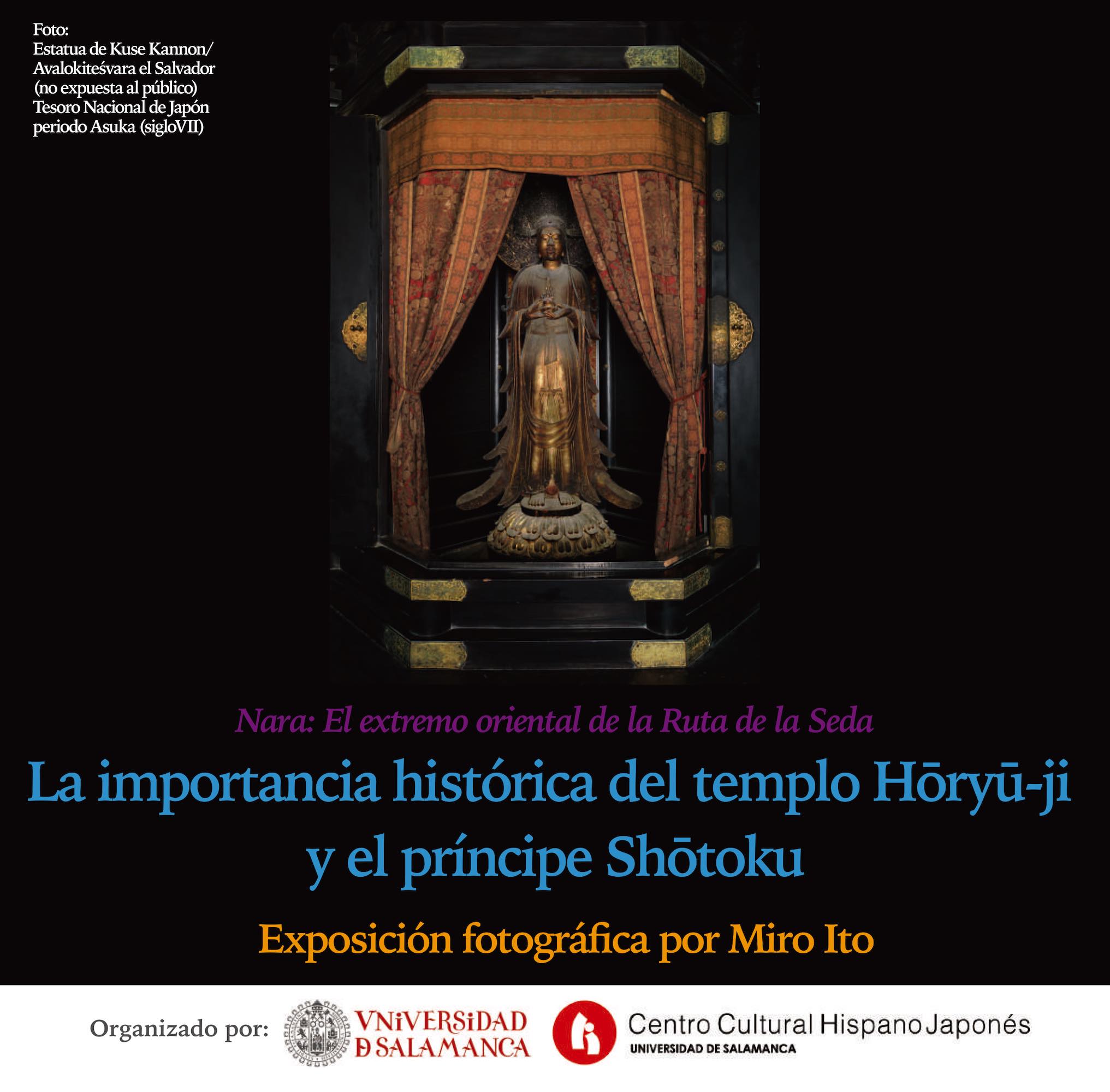
Announcement: ‘The Historical Significance of the Hōryū-ji Temple and Prince Shōtoku’—A Photo Exhibition by MIRO ITO
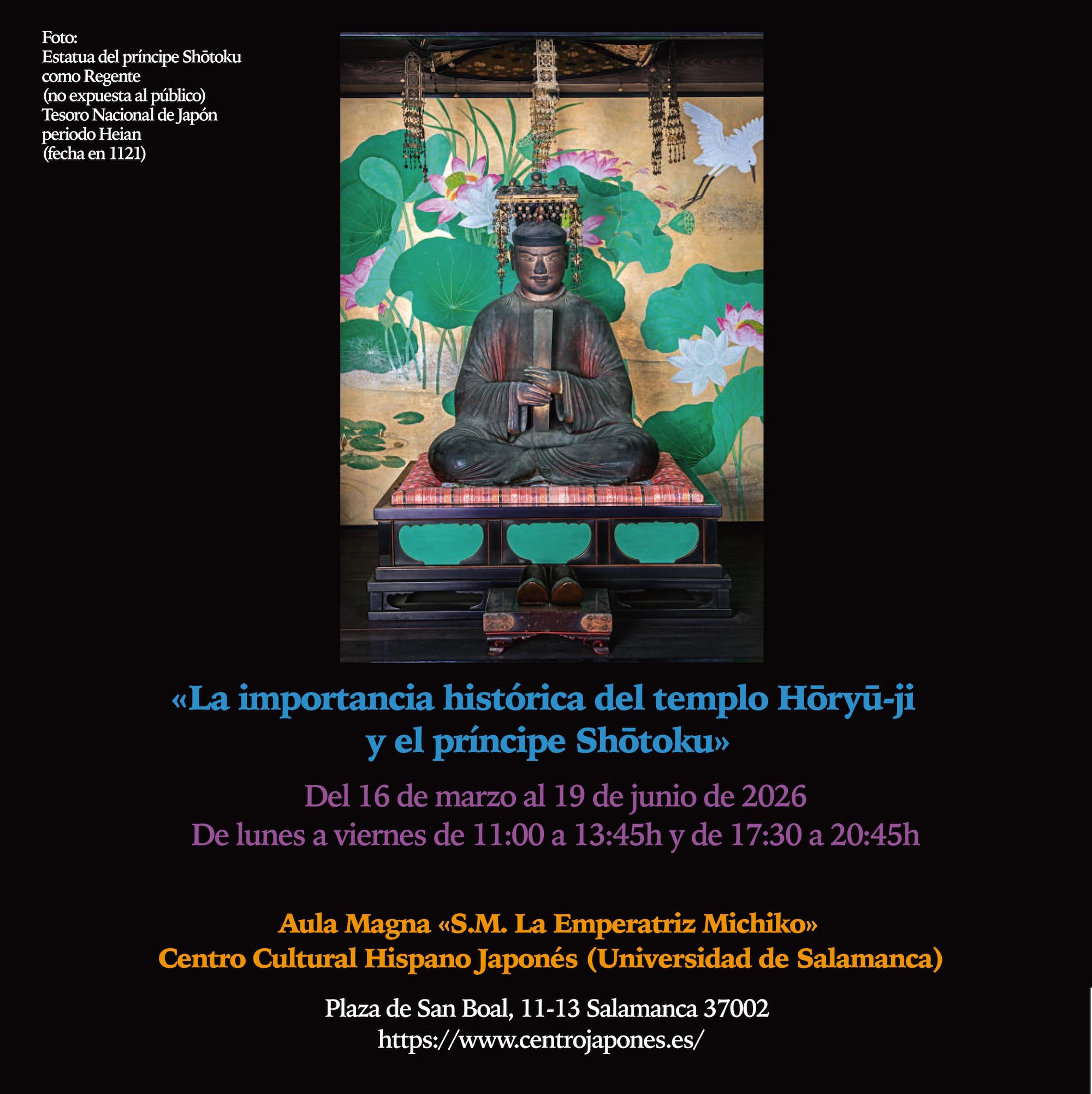
🔸Venue: Empress Michiko Hall, Spanish-Japanese Cultural Center, University of Salamanca
🔸Dates: 16 March to 19 June 2026
🔸A World Premiere: the first Hōryū-ji photography exhibition outside of Japan
A photography exhibition entitled ‘the Historical Significance of Hōryū-ji and Prince Shōtoku’ opened at the University of Salamanca in Spain on 16th March 2026. Amid growing global turmoil, this project aims to promote a spirit of ‘harmony’—as set out in the ‘Seventeen-Article Constitution’ promulgated by Prince Shōtoku in 604—to the wider world. The required photography / filming work—for which exceptional permission was granted by the Hōryū-ji—took 20 years to complete. This is the first exhibition of its kind to showcase the National Treasures of Hōryū-ji outside of Japan.
🔸Exhibition Purpose
Through photographs and documentary footage showcasing the Hōryū-ji’s treasures and events, this exhibition explores the temple’s history as the eastern terminus of the Silk Road.
At the same time, it places the achievements of Prince Shōtoku (Prince Umayato)—who laid the foundations for Japan’s politics and culture that continue to this day—within the context of East Asian history from the 7th century onwards.
🔸Exhibited Work
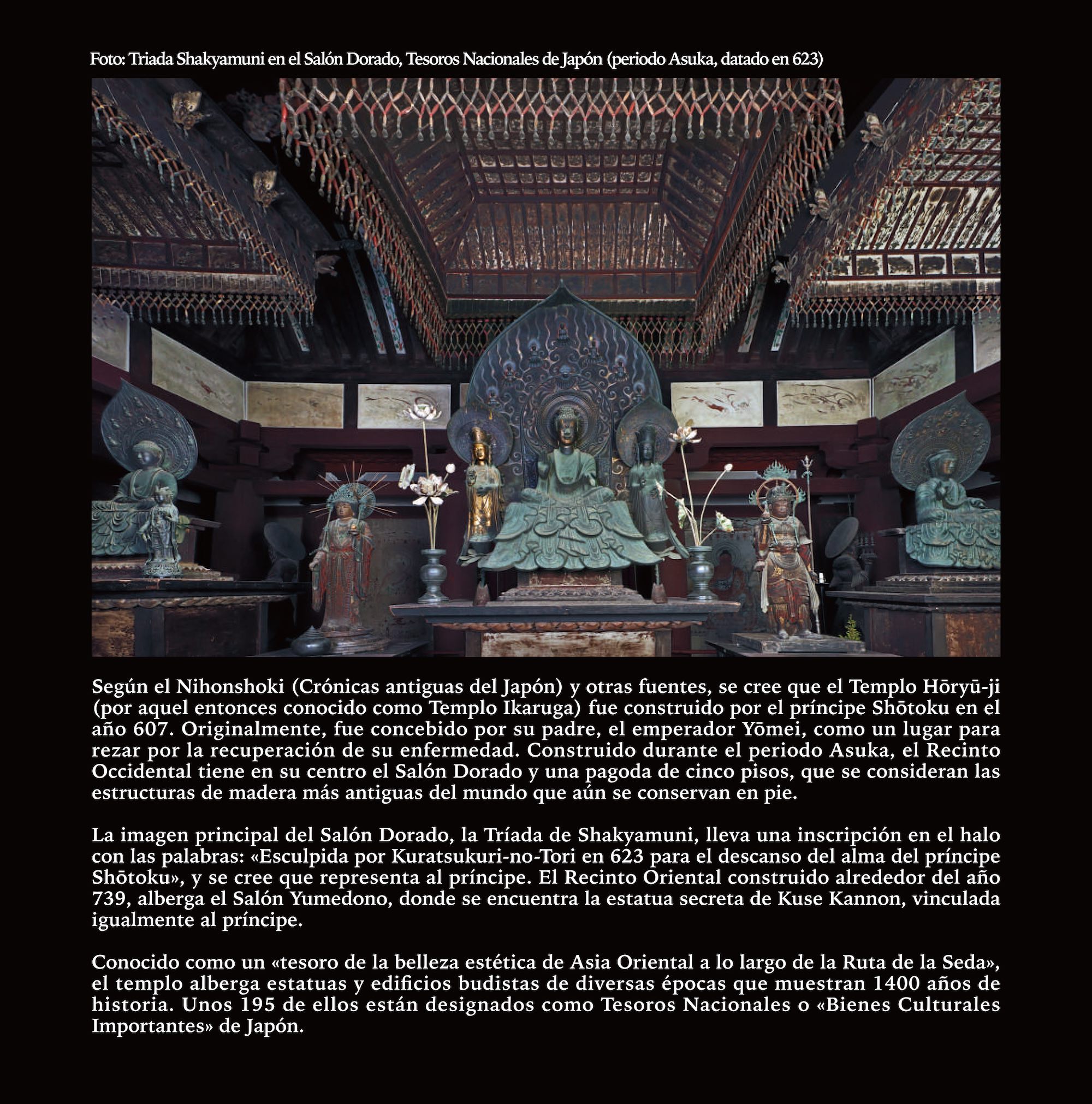
The exhibition features photographic works and a video poem (15 minutes, in Spanish) showcasing artefacts—that convey the grandeur of ancient East Asian Buddhism—which reached Nara via the Silk Road. At the collection’s core are outstanding National Treasures from the Asuka period, including the Shakyamuni Triad , the Standing Statue of the Hidden Buddha, the Kuse Kannon, the Kudara Kannon, the Yumemichi Kannon, the Yakushi Nyorai, and the Four Heavenly Kings.
🔸Salamanca Japanese Culture Week
The entire city of Salamanca was designated a UNESCO World Heritage Site in 1988. The Spanish-Japanese Cultural Centre was established there in 1999 as an annex to the University of Salamanca, which was founded in 1208 and is the fourth oldest still-existing university in the world. The centre’s ‘Empress Michiko Hall’ (formerly the Palais San Boileau), is the only cultural facility in the world permitted to bear the name of the former Empress. The annual ‘Salamanca Japanese Culture Week’ is held here every year, which serves as a hub for cultural exchange between Spain and Japan through exhibitions, lectures and concerts marks its 25th anniversary this year.
Spanish-Japanese Cultural Centre was established there in 1999 as an annex to the University of Salamanca, which was founded in 1208 and is the fourth oldest still-existing university in the world. The centre’s ‘Empress Michiko Hall’ (formerly the Palais San Boileau), is the only cultural facility in the world permitted to bear the name of the former Empress. The annual ‘Salamanca Japanese Culture Week’ is held here every year, which serves as a hub for cultural exchange between Spain and Japan through exhibitions, lectures and concerts marks its 25th anniversary this year.
Organised by: The Spanish-Japanese Cultural Center, University of Salamanca
Co-organised by: Japan Camera Industry Institute, Japan Authentic Heritage Initiative
Concept and Production: Media Art League
Photo permits by: Hōryū-ji Temple
Photography, text and video by: Miro Ito
English editing by: Andreas Boettcher
Spanish editing by: The Spanish-Japanese Cultural Center, University of Salamanca
Endorsed by: Embassy of Japan in Spain; Japan Foundation, Madrid
Production of cine-poetry: Nara Prefecture
Funded by: The Tokyo Club
Prospectus: La importancia histórica del templo Hōryū-ji y el príncipe Shōtoku